Blog Archives
EHDD’s Response to the “World Architecture Survey”
Vanity Fair recently polled leading critics, deans of architecture schools, and architects with two questions: what are the five most important buildings, bridges, or monuments constructed since 1980, and what is the greatest work of architecture thus far in the 21st century? The results highlight a glossy cannon of international starchitects and their iconic works yet no green buildings made the cut, spawning a flurry of response from the green building community. To add further fuel to the fire, architectural correspondent Matt Tyrnauer quipped in an interview with NPR that green buildings are just not sexy – at least not yet. Determined to counter this assumption, Lance Hosey from Architect Magazine surveyed green building professionals to build a ‘G-List’ of the best green buildings. The projects that made the list represent a broad range of interpretations as to what makes a ‘green’ building and many fall into the same trap that the Vanity Fair list does, focusing on aesthetics over performance.
The surveys and the torrent of discussion they generated demonstrate a deep divide within the architectural community in terms of what sustainability should mean for design. Can high design also be environmentally responsible? Can a green building represent the best of both architecture and sustainability? I would argue yes; however, to do so, architects must stop seeing sustainability issues as separate from design. Environmental responsibility must be integrated within the design process so that there is no longer a division between what qualifies as a ‘green’ building or as great architecture: it is simply one and the same. Buildings are silent partners in the future sustainability of the planet but architects have the unique opportunity to affect real change and to lead the charge for a more beautiful and environmentally sustaining future. We are creative problem solvers by nature; shouldn’t this be the most exciting design challenge of our profession?
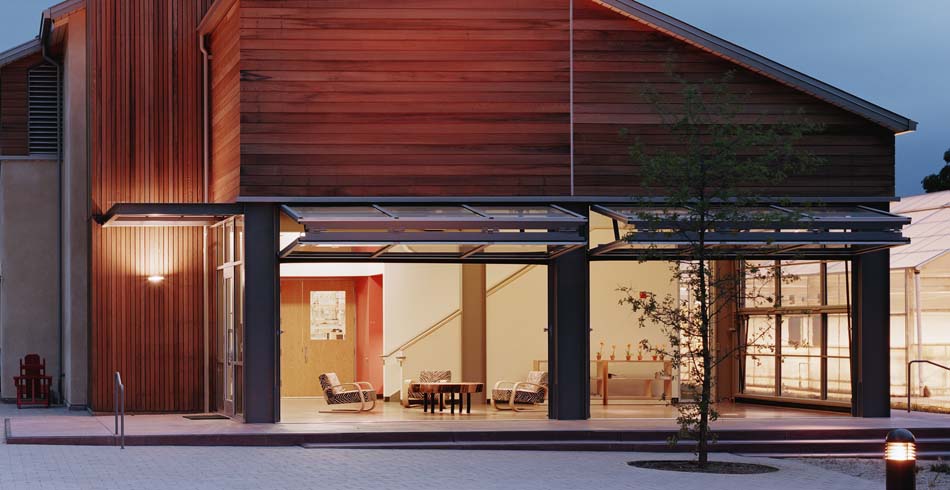
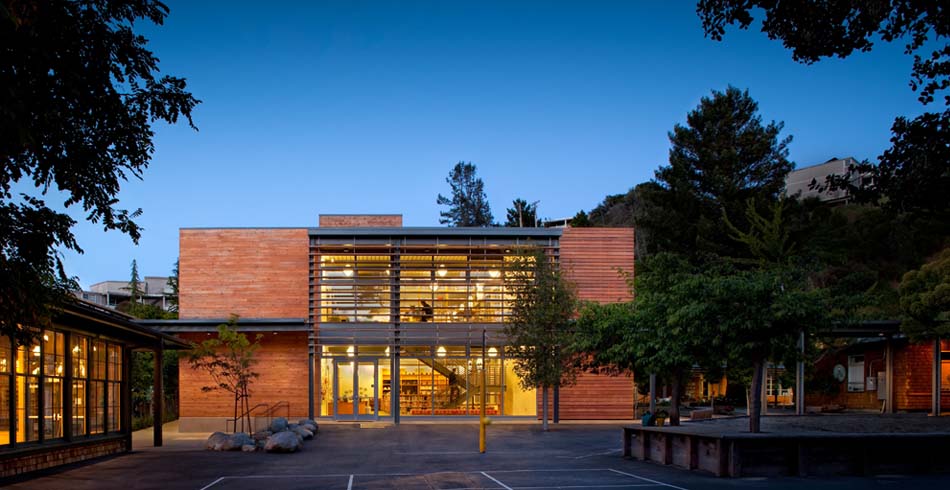
To paraphrase Dr. Ray Cole, “buildings themselves are not sustainable; however, buildings can be designed to support sustainable patterns of living.” At EHDD, we are beginning to think beyond the building, recognizing that the process of designing beautiful and inspiring green buildings can be a catalyst for organizational change. The recently completed Learning Resources Center at Marin Country Day School does just that. The project has all the features and more of a high achieving LEED Platinum school: rainwater harvesting for cooling and toilet flushing; photovoltaics that produce 100% of the facility’s net annual energy needs; effective daylighting and lighting controls; native landscaping and stream restoration; and locally sourced materials with high recycled content. But it is more than the sum of these parts. The students, teachers, and parents all love the new buildings. The excitement generated by the project has galvanized the community in support of the school’s sustainability goals and these have been integrated into the curriculum as well as the campus master plan. Faculty report that they teach differently in their new daylit classrooms: the openness and transparency of the spaces encourages collaboration and engagement that wasn’t possible in their old rooms. Students are more relaxed and attentive as well. One student quipped that ‘other schools have hallways; we have trees for hallways.’ In essence, the architecture at MCDS inspires and right now we are in desperate need of inspiration; not from “sexy” energy hogs of buildings but from projects that celebrate architecture as well as sustainability and performance. Where’s the list for that?
– Janika McFeeley, LEED AP BD+C
Designer
China: Better Life, Better City and Better Schools

I am reporting on my two-week trip – part pro bono service, part celebration, part business development. The primary purpose of my trip was to attend to the opening of the Zhang Jia Yuan Elementary School in Qian Yang Country and the graduation of 500 of my friend and mentor Roz Koo’s “Spring Bud” girls. The timing of these events coincided nicely with Expo 2010, so my trip also had an international flavor.
In 2008, after an earthquake destroyed hundreds of schools in Sichuan and Shaanxi Provinces, I contacted Roz to find out if her “Spring Bud” girls had been affected. She had been in Shaanxi Province during the earthquake, as the school she was in rattled and rolled. While none of her girls’ schools were affected she was profoundly moved by the devastation and was sorting out what to do; so I offered to help.
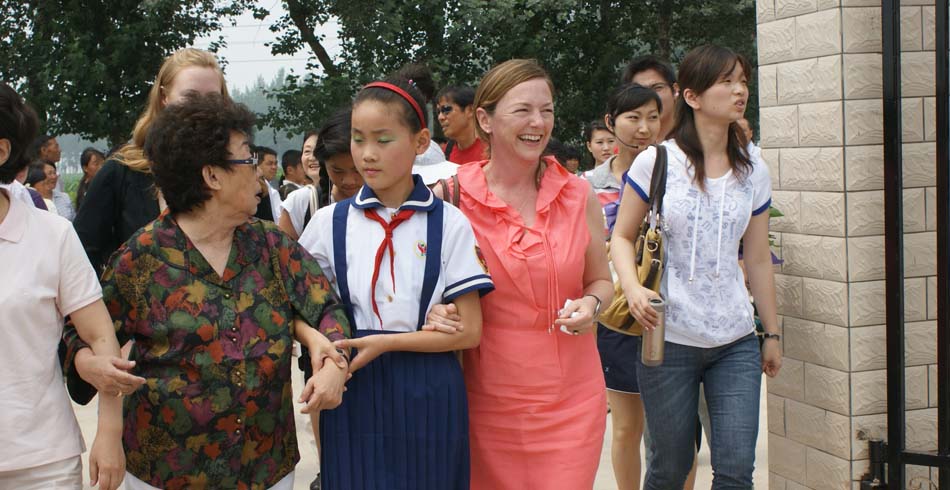
This year, 500 of them graduated from key senior high schools, and we attended elaborate ceremonies that celebrated their achievements. While we were there, the scores of the National University Entrance Exams were published – so far, the results were positive for the girls.
Back to 2008, Roz decided to rebuild a school in the remote regions of Shaanxi Province – outside BaoJi in Qian Yang. She contributed US$226,000 toward the project’s US$500,000 cost, while the local Education Department contributed the rest.
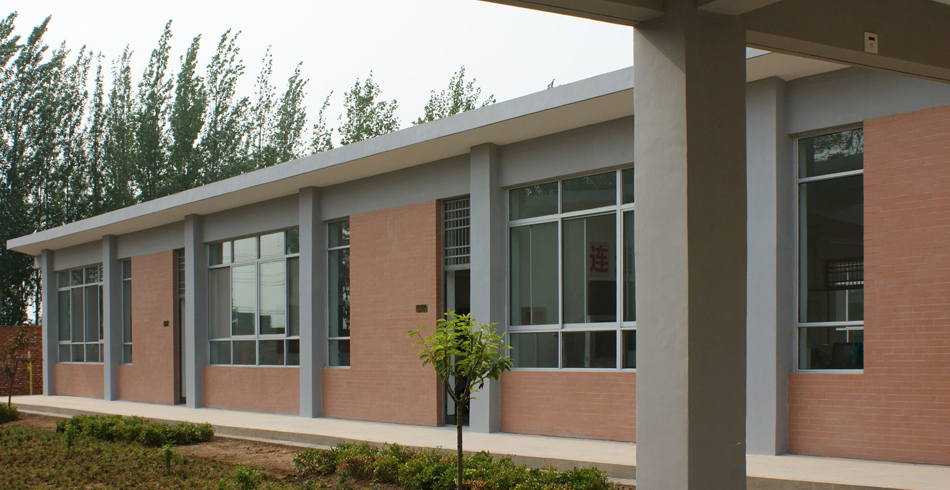
EHDD donated design services. With Tipping Mar and Stantec, we worked to fulfill Roz’s vision for a school that was not only seismically safe but also sustainable. Our local architect, Dien Tseng, provided translation to our local partners – the Shaanxi Provincial Women’s Federation and the Northwest and Bao Ji Design Institutes. We designed the school in six weeks; it was built in six months; and the children will attend beginning in September.
We spent a VERY long day traveling to Qian Yang, where we celebrated with hundreds of people from the villages that will feed into the school. The school, I am very pleased to say is a unique, yet appropriate design, which I hope provides a model or prototype for green schools throughout rural China.
The Expo 2010 theme is “Better Life, Better City”. The lines were long during the 100+ degree days, so we chose the night tour. With the British Pavilion as our destination, we passed through Finland, Serbia and the Netherlands for contrast. Seeing how a country captures its national identity and message in a single place offered many lessons for our own exhibit work. Technology, tactility, and artistic use of materials linger as memories.
There has been a focus on development in western China, and Xian – an important historic, Imperial City and the original starting point of the Silk Road – as the gateway to this region. It has seen a growth of two million people in two years.
Simultaneously, the government is investing in the rural regions outside the major metropolises, and particularly in the re-building of schools and villages destroyed by the earthquakes. From what I ascertained, some of the villages had been rebuilt post-earthquake, in the courtyard style, but with a central plaza that provided a place for the community to gather. Having left the immense developments outside Xian, the capital City of Shaanxi province, I was struck by how simply, cleverly and sustainably, the farming towns were harnessing the power of nature and creating appropriate communal spaces. So a better city can also mean a better “country”.
Jennifer K. Devlin, AIA LEED AP
Principal
EHDD Tours the San Francisco Dump
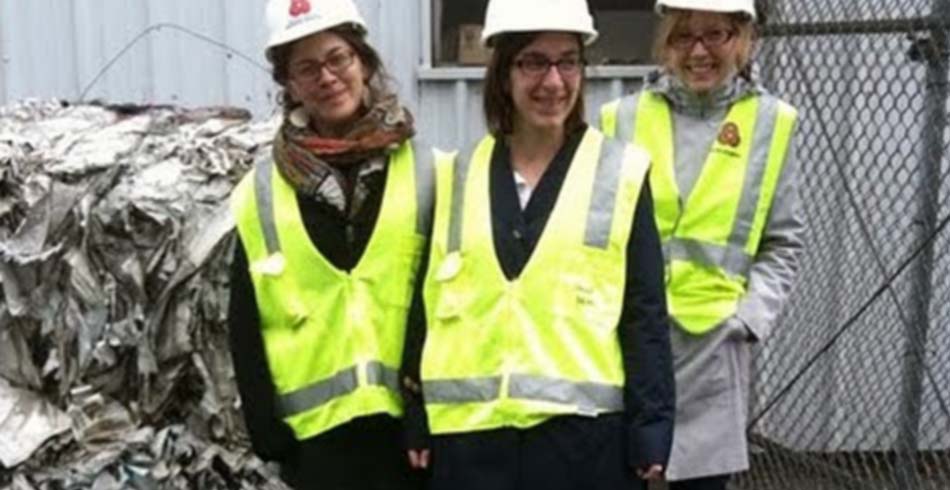
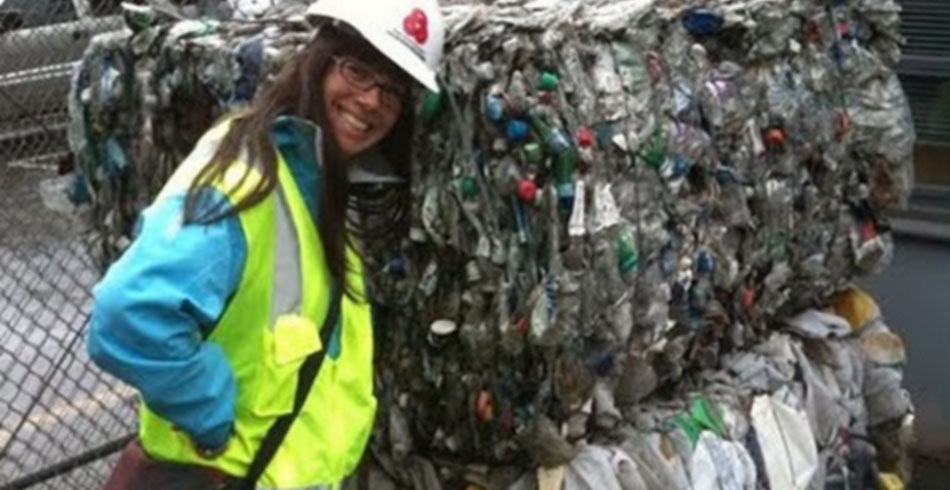
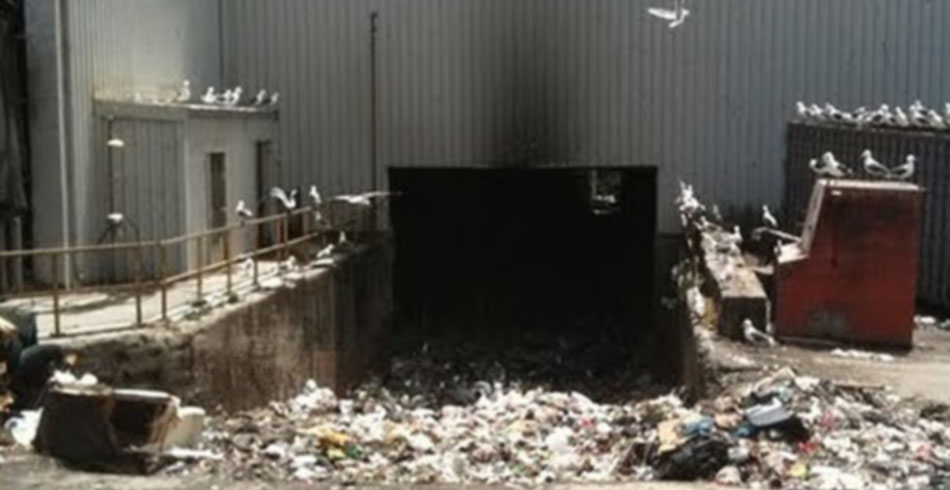
A small group of folks from the office attended a fantastic tour of the San Francisco dump in late May. We toured the recycling and transfer stations as well as the artist in residence studio and learned a ton about what it takes to deal with the city’s trash.
• San Francisco is almost at its 2010 goal of 75% waste diversion. The composting program has been a huge part of this success.
• Don’t put plastic bags in the blue bins! The huge conveyor belts that move trash past the sorters jam daily due to plastic bags in the recycling stream and cause costly delays.
For more information, check out sunsetscavenger.com
– Janika McFeeley, LEED AP BD + C
Designer