Spring Road Residence
Kentfield, CA
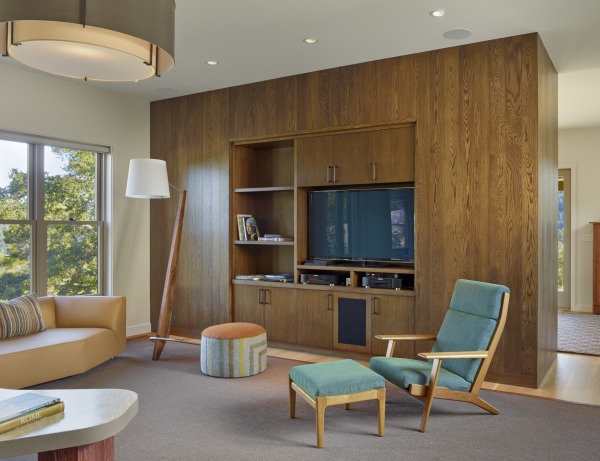
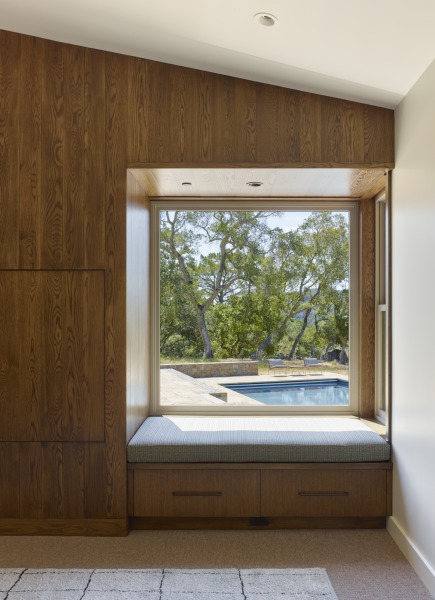
This home was designed for a family of four, and early on in the design process, the client stated that this was to be their “first and last house.” The two teenagers would be leaving for college within four years of finishing construction, so the design strategy was to come up with a family friendly house that would accommodate the clients as empty-nesters, and also plan for future generations of the same family, as well as aging grandparents visiting or moving in. To that end, the couple would be able to live on the first level and close down the upstairs kid’s wing as needed. The first floor guest room also includes a roll-in shower if needed for the future.
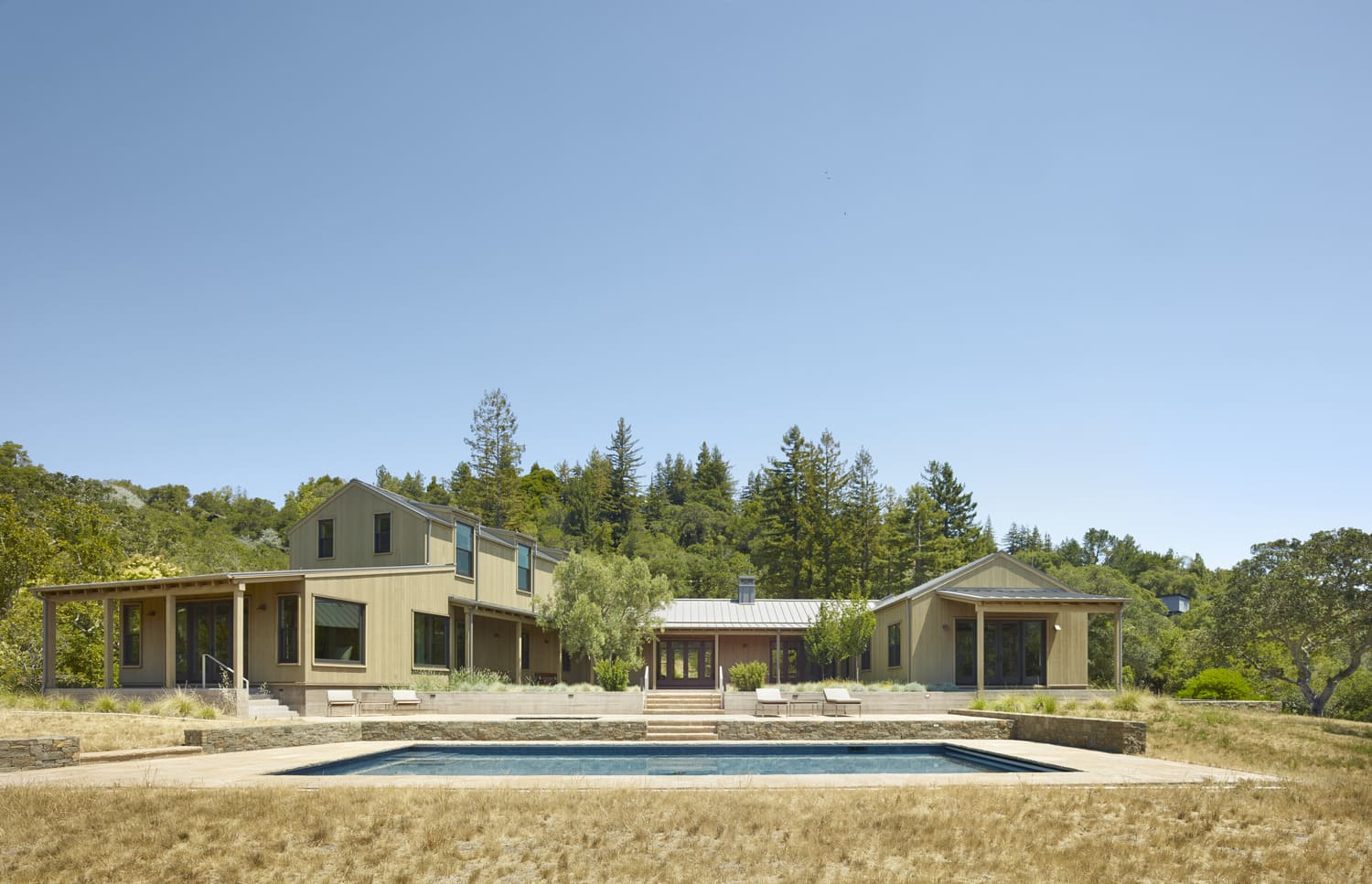
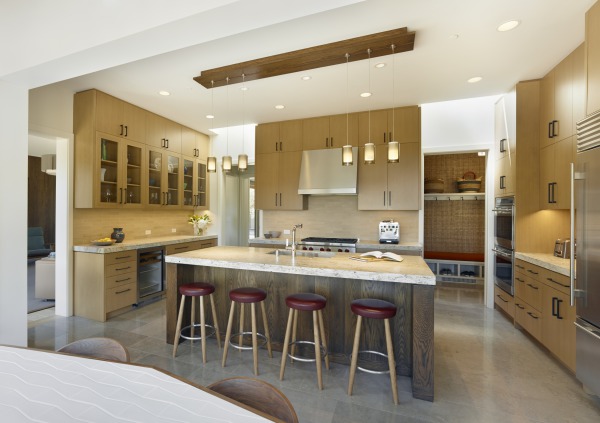
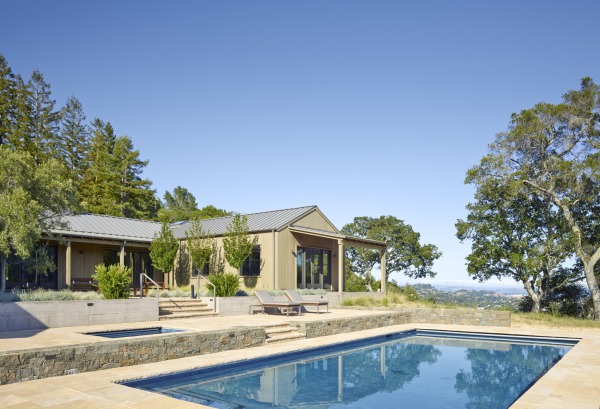
The design is a group of public rooms and spaces arranged around a south-facing courtyard, which will act as a large outdoor room to enjoy the beautiful weather and views that Kentfield is famous for. The two-story wing on the western side of the courtyard comprises a Master Bedroom suite and guest bedroom on the ground floor, and the children’s bedrooms (with a shared bathroom) on the second floor. The northern wing contains the public rooms—the Living Room and the Dining Room, which both open on to the courtyard. The eastern wing is made up of a series of connected family spaces uninterrupted by doors—the kitchen, the family room and a home office.
This unique hillside lot came with commanding panoramic views of nearby Mount Tamalpais, as well as a dramatic view looking east across the San Francisco Bay to the Campanile at UC Berkeley. The courtyard rooms were laid out to capture views of Mt. Tam, while the east-facing kitchen is set up to guarantee a sunrise view over the bay while enjoying a family breakfast.
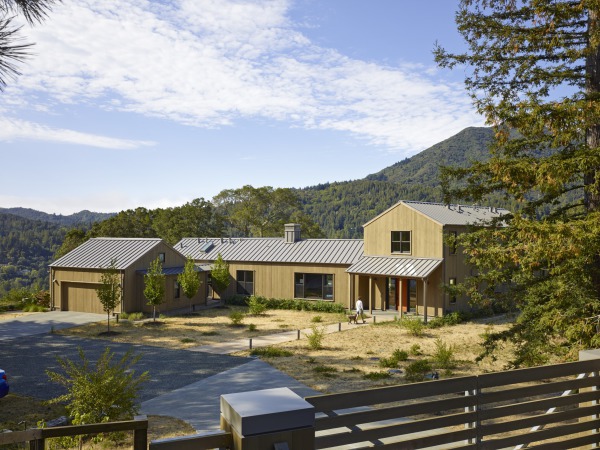
This home was built using Passive House strategies, including a super-insulated building envelope, as well as a high-efficiency furnace, which is paired with an energy recovery ventilator to re-use conditioned air already in the house. A photo-voltaic array on the garage roof allows the house to generate most of its own electricity, and an electric car charger was included in the garage.
Bioswales in the landscape hold stormwater coming off the roof and terraces and provide on-site percolation and detention before the water goes into the adjacent swale along the road, reducing the peak flow of water dumping into the swale during storm events as well as filtering the run-off. Underground water tanks hold well water for irrigation of the native, drought-tolerant plantings and ultimately are irrigated as little as possible, solely from the well, which has a very low output.